
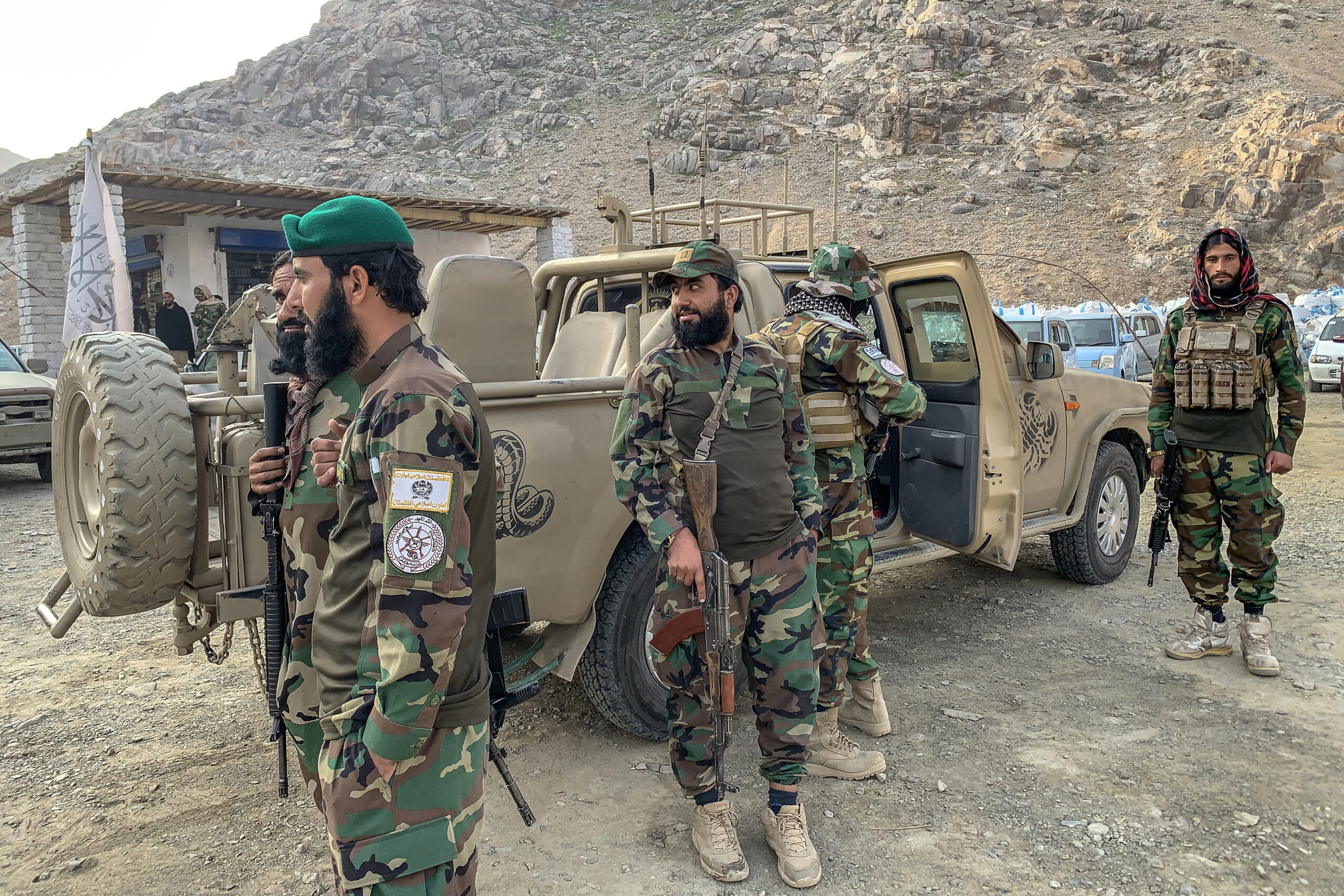
The tension between Pakistan and Afghanistan has escalated once again in recent days. Officials from the Taliban government in Afghanistan stated on Monday (September 21) that Pakistan launched airstrikes in the eastern part of Afghanistan, resulting in at least 3 fatalities and 4 injuries.
According to a message posted on the social media platform X by the Taliban government’s deputy spokesperson Hamdullah Fitrat, Pakistani military aircraft struck a residential area in Kunar province, on the border with Afghanistan, at around 3 am, resulting in the deaths of 3 members of the same family and injuring 4 others. Fitrat also mentioned that around 4 am, Pakistani military aircraft bombed two targets in the Barmal area of Paktika province – one was a shop and the other was an uninhabited house, both of which were destroyed but with no casualties.
Taliban’s chief spokesperson Zabihullah Mujahid condemned the airstrikes, calling them “aggression and crimes,” and warned that Afghanistan would respond appropriately.
The Pakistani military has not yet released an official statement on the matter. However, two anonymous Pakistani security officials stated that the airstrikes targeted suspected militant hideouts, claiming that 28 suspected militants were killed. Due to not being authorized to discuss the operations publicly, both individuals requested anonymity.
Prior to these airstrikes, there were successive attacks on police facilities in northwestern Pakistan. On September 20, six Pakistani security personnel, including two officers, were killed in a clash with militants near the Afghan border in Hangu. The day before, a suicide and militant attack on a police facility in Kohat resulted in at least 21 deaths and over 100 injuries.
Earlier, the Pakistan Information Department had warned that if attacks within its borders continued, Pakistan might target militant hideouts within Afghanistan and urged Kabul to take action against what it referred to as “militant sanctuaries and recruitment/training networks.”
The main conflict between Pakistan and the Afghan Taliban government centers around cross-border militant activities. Pakistan has long accused the Afghan Taliban government of sheltering the “Tehrik-i-Taliban Pakistan” (TTP) and allowing them to launch cross-border attacks from within Afghanistan. TTP is not the same organization as the Afghan Taliban but has an alliance with them. The Afghan Taliban government denies these allegations, emphasizing that militant activities are Pakistan’s internal issue.
Since February of this year, the two countries have experienced severe clashes multiple times. In March, Pakistan launched airstrikes on Kabul, which the Afghan side claimed resulted in hundreds of deaths; Pakistan denied targeting medical facilities. After the incident, the UN assistance mission estimated that around 143 people had died.
In terms of military capabilities, there is a significant disparity between the two countries. According to data from the International Institute for Strategic Studies (IISS) in London, Pakistan has around 660,000 active-duty military personnel, with the air force equipped with 422 combat aircraft and over 260 helicopters; whereas Afghanistan lacks a fully capable combat aircraft fleet, relying mainly on a limited number of planes, helicopters, and drones.
Currently, there are significant differences in the accounts given by both sides, and the casualty numbers and the nature of targets remain unverifiable independently. Following the airstrikes, there is a risk of further escalation in the tense border situation between the two countries.