
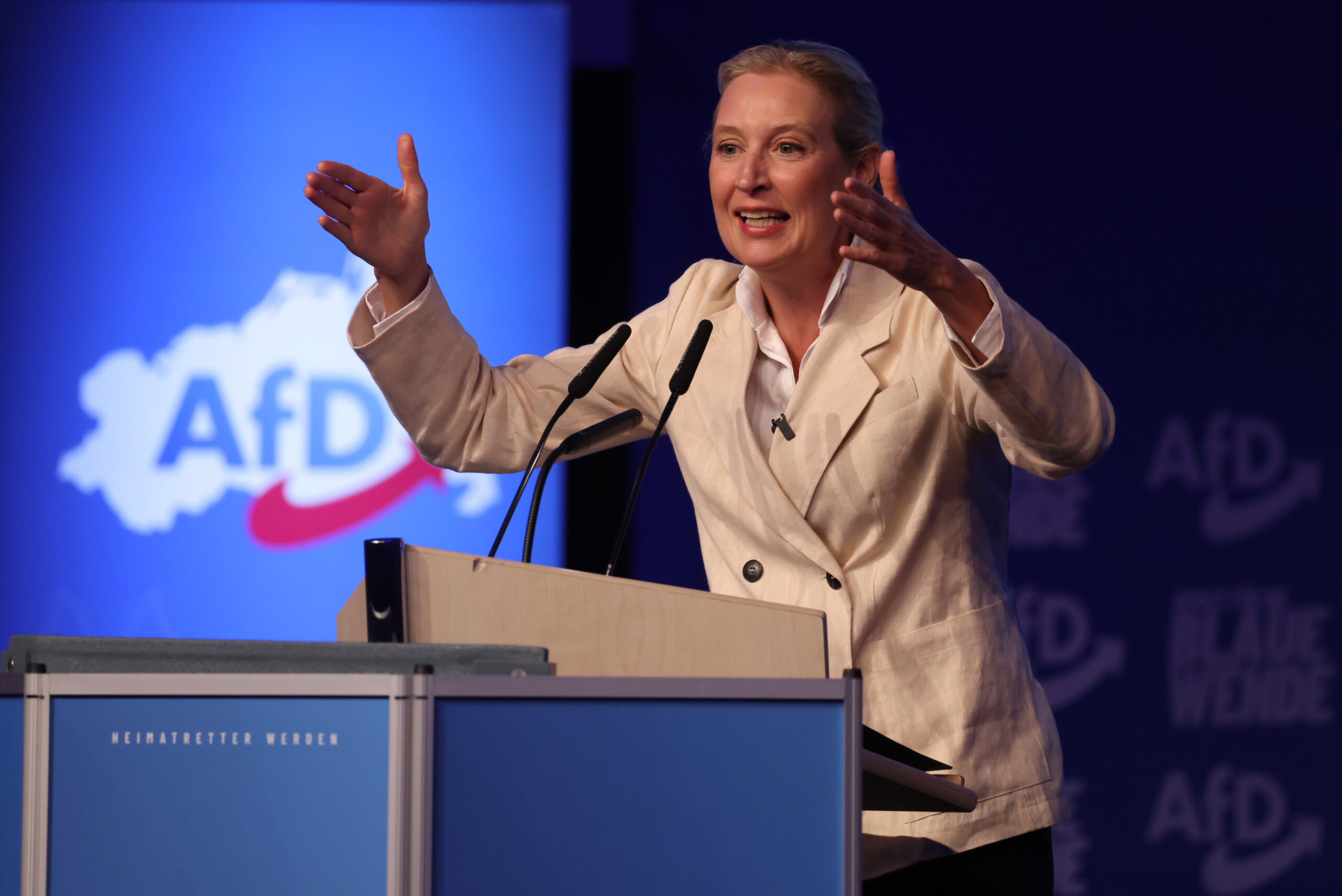
The Alternative for Germany (AfD) party won the elections in the northeastern state of Mecklenburg-Western Pomerania on Sunday (September 20), with Chancellor Friedrich Merz’s Christian Democratic Union (CDU) receiving only 4.9% of the vote, failing to enter the state parliament for the first time. Merz described this result as a “disaster” but stated that he would continue to push for reforms.
This defeat further increases the political pressure on Merz. AfD has topped the polls twice this month in elections in eastern German states. However, as other major parties have ruled out forming a coalition with AfD, even if the party receives the most votes, it does not mean they can control the state government.
Preliminary results released by the Mecklenburg-Western Pomerania State Election Commission showed that AfD received 38.2% of the vote, with the Social Democratic Party (SPD), which currently leads the state government, coming in second with 35.5%. The Left Party and the Greens received 6.5% and 5.7% respectively. CDU only gained 4.9%, falling below the 5% threshold needed to enter the state parliament.
CDU had never before fallen below the 5% threshold in state, federal, or European parliament elections in Germany. The party’s previous lowest vote share in state elections was 9% in Bremen in 1951. This 4.9% vote share marks a new low for the party in post-war state elections.
Following the initial results, Merz stated, “We cannot gloss over the results in Mecklenburg-Western Pomerania—it is a disaster.”
However, he has not changed the direction of government reform because of this. Merz said, “What needs to be done now requires integrity, determination, and patience.”
He also mentioned that as the chairman of CDU and Chancellor of Germany, he will demonstrate these qualities.
The measures currently being pushed by Merz’s government include reducing income tax for low to middle-income families, reforming the pension system, and reducing bureaucratic procedures in hopes of boosting Germany’s sluggish economy.
According to the preliminary seat allocation, AfD will secure 32 seats, while SPD will have 29 seats, and the Left Party and the Greens will each have 5 seats. The ruling coalition formerly composed of SPD and the Left Party has lost the majority. However, if they join forces with the Greens, the three parties can secure 39 seats, a majority in the 71-seat state parliament. All three parties have ruled out forming a coalition with AfD.
AfD’s co-leader Tino Chrupalla stated prior to the announcement of the first exit polls, “We evidently have been given the mandate to govern here.” He expressed that AfD is willing to enter into coalition government negotiations with other parties.
SPD Governor Manuela Schwesig pointed out that assistance to Ukraine was also one of the issues that local voters in Mecklenburg-Western Pomerania were concerned about.
She said, “In my state, many people are against supporting Ukraine, whether financially or militarily.”
She also mentioned that many people hope energy can be transported through the Nord Stream pipeline again.
The Berlin state elections held on the same day did not favor CDU either. According to the preliminary results released by the Berlin electoral authorities, the Left Party led with 25.7% of the vote, followed by CDU with 18.8% and AfD with 16.3%. This is the first time the Left Party has become the party with the highest vote share in the Berlin state elections.
The Left Party’s lead candidate Elif Eralp stated that the party would address housing issues in Berlin. “Lead candidate” is the prominent figure a German political party presents in elections, usually the main candidate vying for the position of government leader.
The Left Party proposes to turn some residential properties owned by large corporations into public housing. However, to lead the Berlin state government, they still need to negotiate with other parties to form a ruling coalition.
The results of these two state elections have further increased the political pressure on Merz. Earlier, CDU was defeated by AfD in the Saxony-Anhalt elections on September 6.