
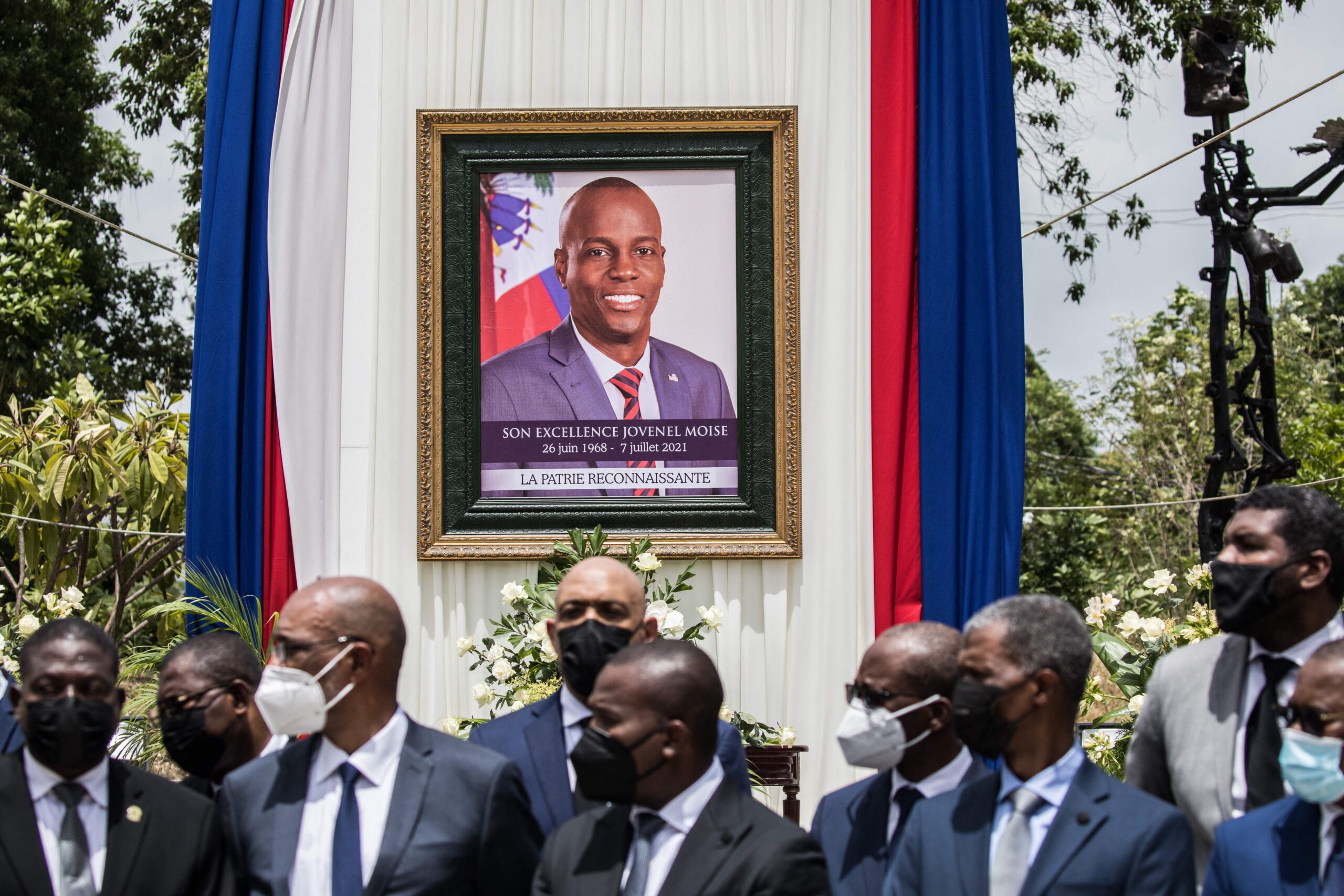
Haiti’s former president Jovenel Moise’s assassination case has seen new developments, as 18 suspects have recently been extradited to the United States and will face judicial proceedings in Florida.
According to Reuters, Jason Reding Quiñones, a federal prosecutor in southern Florida, stated on September 20th that the 18 suspects left Haiti on a US military plane that day and were transported to the United States for trial.
Haiti’s Minister of Justice, Patrick Pelissier, also confirmed the extradition, noting that significant progress has been made in the US legal process, including arrests, charges, and convictions, while the Haitian case has been long delayed and has yet to go to trial for five years.
Information previously disclosed by the United States revealed that the extradited individuals include several former Colombian military personnel as well as Haitian individuals implicated in the case.
Moise was assassinated on July 7, 2021, at his private residence near the capital, Port-au-Prince, at the age of 53. During the attack, his wife Martine Moïse was also seriously injured. Following the incident, Haiti’s political situation further deteriorated, and armed gang influence continued to grow.
Subsequently, both Haiti and the United States initiated investigations and brought criminal charges. US prosecutors stated that part of the assassination conspiracy’s planning and preparation took place in southern Florida. Currently, the United States has filed charges against 30 individuals in connection with this case.
In May of this year, a federal jury in Florida convicted four men of conspiring to kill Moise. Prosecutors alleged that the individuals recruited personnel, including 22 former Colombian military members, and provided funds, weapons, and ammunition. Investigations and trial evidence showed that the individuals planned several kidnapping or assassination attempts on Moise, ultimately resulting in a group of former Colombian Special Forces soldiers attacking the president’s residence.
Since Moise’s assassination, Haiti has been plagued by ongoing political crisis and worsening security. Due to the involvement of individuals from multiple countries and issues such as cross-border funding, weapons, and mercenaries, the investigation and judicial proceedings have been highly complex.
Pierre Espérance, a Haitian human rights activist, criticized the slow progress of the Haitian judicial system in this case, arguing that extraditing suspects to the United States for trial reflects serious challenges within Haiti’s judicial system. He advocates for strengthening Haiti’s judicial capacity so that major and complex cases like this can be tried domestically within Haiti.