
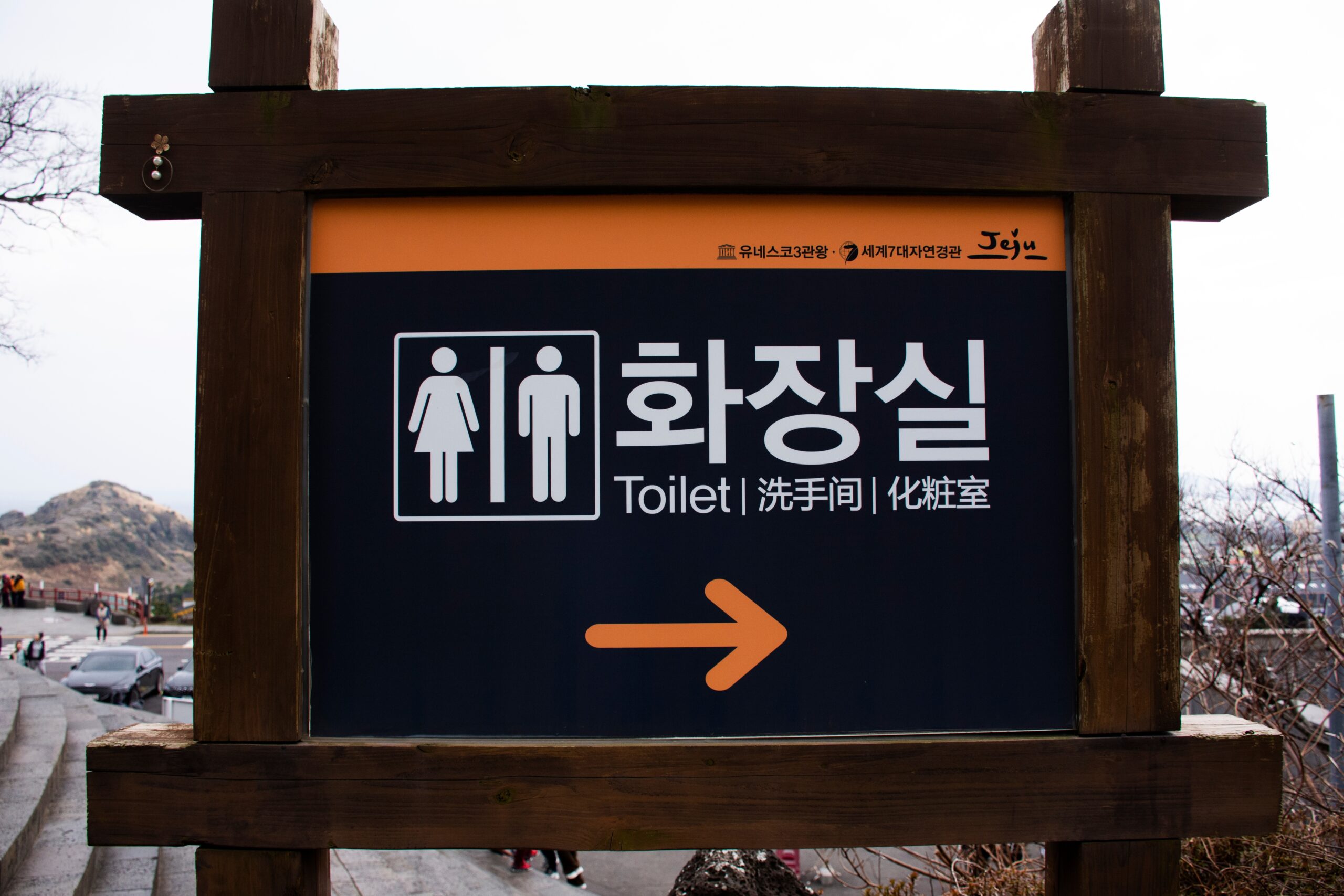
When traveling abroad, the need to use the restroom is inevitable, and one must rely on public facilities, especially while on the go. It’s important to be aware of where public restrooms are located and to understand the local restroom etiquette to avoid embarrassment or inconvenience in unfamiliar territories.
According to the US magazine “Travel + Leisure,” using public restrooms abroad can be awkward if mishaps occur, such as causing a toilet clog. Therefore, before embarking on your next international trip, it’s a good idea to familiarize yourself with restroom customs around the world.
In the past, in European cities like London and Paris, it was common to pay a fee to use public toilets, often through coin-operated facilities. However, out of ethical considerations, these pay-per-use systems have been discontinued or replaced with “Tap to Pay” technology in many places.
There are exceptions in certain cities, such as Amsterdam, where paid restroom facilities are still prevalent, although payment is often not mandatory. If you use a free restroom with an attendant, it is customary to leave a small tip in the collection jar after use.
It is worth noting that attendants sometimes place large denomination banknotes in the collection jar to deceive visitors. In reality, a small fee equivalent to 0.5 to 1 US dollar is usually sufficient.
In countries like China, India, Thailand, and Singapore in Asia, squat toilets are commonly used instead of sitting toilets. Research suggests that squat toilets are more ergonomic and healthier, although they require better knee flexibility.
When using a squat toilet, make sure your pockets are empty and secure to prevent items from falling. After use, it’s recommended to utilize a foot pedal or water bucket for flushing and to prevent splashing to avoid contact with sewage on your clothing.
In some countries or regions where pipes are narrow or lack systems to break down toilet paper, it is customary to dispose of used toilet paper in trash cans or use a bidet for cleaning. Flushing used toilet paper in these locations may cause blockages.
Countries where flushing toilet paper is discouraged (but not limited to) include China, Turkey, Greece, Montenegro, Egypt, as well as several countries in South America such as Brazil and Colombia.
Outside the United States, especially in Europe, Asia, and parts of South America, bidets are commonly found in restrooms, although their prevalence varies. These water-cleansing devices originated in France, so they are still commonly seen in many French restrooms, usually positioned alongside toilets.
In countries like China and South Korea, it is advisable to carry your own toilet paper when using public restrooms, as they may not provide it. In China, this is mainly due to theft issues, which were significant enough to prompt the installation of facial recognition systems in some public restrooms in the late 2010s.
If you find yourself without toilet paper after using the restroom, what should you do? Apart from seeking help, you can try several solutions like using receipts or other paper items, sacrificing socks or clothing, or using bottled water for cleaning.
When asking for the restroom location abroad, it’s best to be familiar with the local terms. Generally, the term “toilet” is widely understood and more effective than the American usage of “bathroom” or “restroom”.
In Canada, restrooms are called “washrooms,” in the UK, they are referred to as “W.C.” (water closet) or “loo.” Throughout Europe, “W.C.” or “toilette” are commonly used, in Australia, “dunny” is used, and in Japan, “benjo” is suitable for informal occasions.
Speaking of restrooms, modern flushing toilets have replaced ancient privies and have greatly benefitted many people. But who invented this indispensable tool?
According to Live Science, the first modern flushing toilet was invented by Sir John Harington, an Englishman, in 1596. Prior to this innovation, people mainly relied on pit latrines.
Harington, a poet and courtier to Queen Elizabeth I of England, installed a toilet of his own design in his house and a royal palace in England. The toilet required 7.5 gallons (approximately 28 liters) of water and suffered from a notable flaw – the lack of an S-shaped trap, allowing odors to freely flow back indoors. Ultimately, this toilet did not become widespread.
It was not until 1775 when Scottish inventor Alexander Cumming applied for the first patented flushing toilet. His design included an S-shaped trap and a more advanced valve system, akin to the structure of modern toilets.