
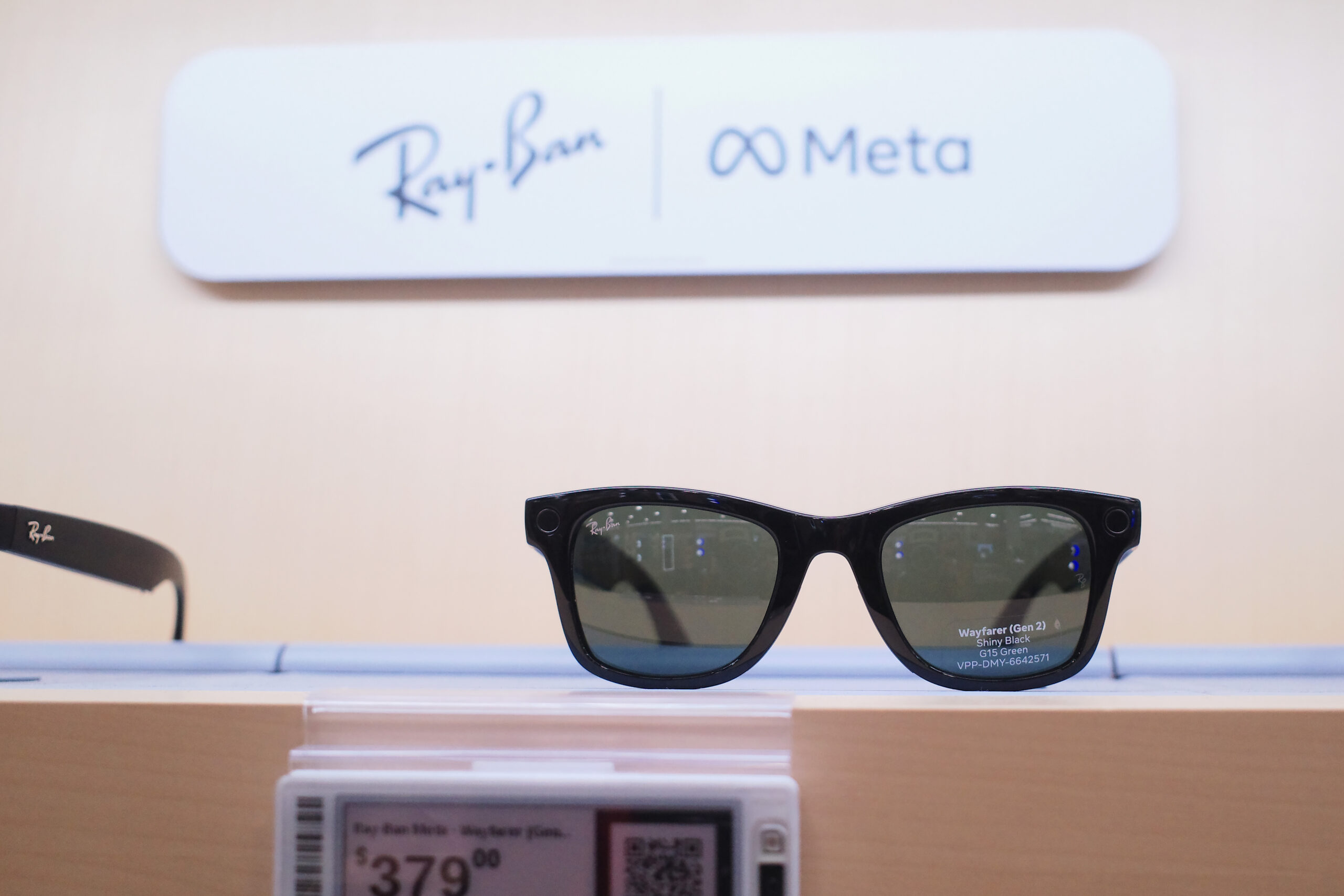
The US law enforcement agencies are expressing concern about the increasingly popular consumer electronic product: Meta smart glasses.
According to an exclusive report by The Guardian on September 8, based on over a dozen previously undisclosed law enforcement documents obtained and reviewed by the newspaper, law enforcement and counterterrorism agencies across the US, from New York to California, from Maine to Tennessee, have begun focusing on the potential secret recording, privacy, and security risks posed by smart glasses.
In January this year, the New York City Police Department’s (NYPD) Counterterrorism and Intelligence Division issued an internal memo requesting a thorough inspection of glasses that allow entry into holding cells. Authorities are concerned that arrested individuals may secretly record inside police stations or detention facilities using Meta smart glasses that resemble ordinary Ray-Ban or Oakley glasses.
Authorities fear that if the recordings expose the layout of the cells, the positions of surveillance cameras, patrol routes of officers, or security measures, it could provide valuable information to criminals.
This concern is not unfounded. In July 2025, a video shot with smart glasses was posted on TikTok, revealing the internal conditions of a detention center in South Carolina in a rare occurrence. The center had previously been under federal investigation for security issues. The video captured scenes of shower rooms, holding cells, crowded dining areas, and activities of detainees, with the subjects seemingly unaware of being recorded.
The biggest controversy surrounding Meta smart glasses lies in the fact that they “do not look like cameras.” When a phone is raised to record, people around usually notice; however, once the smart glasses are worn on the face, the camera is hidden within the frame, allowing wearers to record what is in front of them without pulling out any device.
Meta has incorporated a white LED indicator for this purpose. When taking photos or videos, the LED flashes to alert those around that recording is in progress. Meta states that this indicator cannot be turned off through normal means, and if someone obstructs or modifies the indicator, the camera will be disabled.
Despite this safeguard reflected in the law enforcement documents, it obviously does not completely alleviate their concerns.
Documents obtained by the non-profit organization “Property of the People” show that law enforcement agencies, like the general public, are increasingly worried about being recorded without their knowledge.
In a memorandum released by the Maine Intelligence Fusion Center in June 2026, it is highlighted that “residents and the public may use smart glasses for surveillance and other illicit activities, posing additional risks and concerns for correctional departments and law enforcement agencies.”
The document further points out that some smart glasses can integrate AI software, including facial recognition, which could be used for “doxxing” through public information or uncovering identity and relationship information related to law enforcement personnel.
US government agencies have begun taking action. An internal memo from the US Immigration and Customs Enforcement (ICE) in August of this year stated that smart glasses are wearable video devices and should not be used in federal workplaces because they may record, capture, or transmit sensitive information without staff noticing.
Law enforcement also worries that smart glasses may be used for scouting targets before criminal or terrorist attacks. A memo from the NYPD in January 2025 referenced the New Orleans New Year’s Day terrorist attack; in that incident, a man drove a truck into a crowd on Bourbon Street, resulting in 14 deaths and 35 injuries.
The FBI has notified local law enforcement agencies such as the NYPD that the attacker had ridden a bicycle near Bourbon Street wearing smart glasses twice at the end of 2024. The FBI suggests this could be “pre-attack target reconnaissance.” The memo instructs law enforcement officers to be vigilant and report “suspicious behavior from individuals wearing what appear to be smart glasses.”
Evan Greer, Executive Director of the digital rights advocacy non-profit “Fight for the Future,” says that law enforcement concerns about this technology being used against them or causing harm does not surprise them.
Greer states, “Surveillance makes us all less safe. There is no such thing as ‘super smart glasses’ made solely for good people to use.”
A Meta spokesperson told The Guardian that the incident area is a heavily congested tourist area, where perpetrators could easily use other recording devices, including phones, to capture images.
The concerns about Meta’s smart glasses produced by the company are escalating not only among US law enforcement and federal agents but also among the public and privacy experts. Privacy experts point out that ordinary individuals could unwittingly become subjects in front of lenses on the streets, in restaurants, malls, and even social gatherings.