
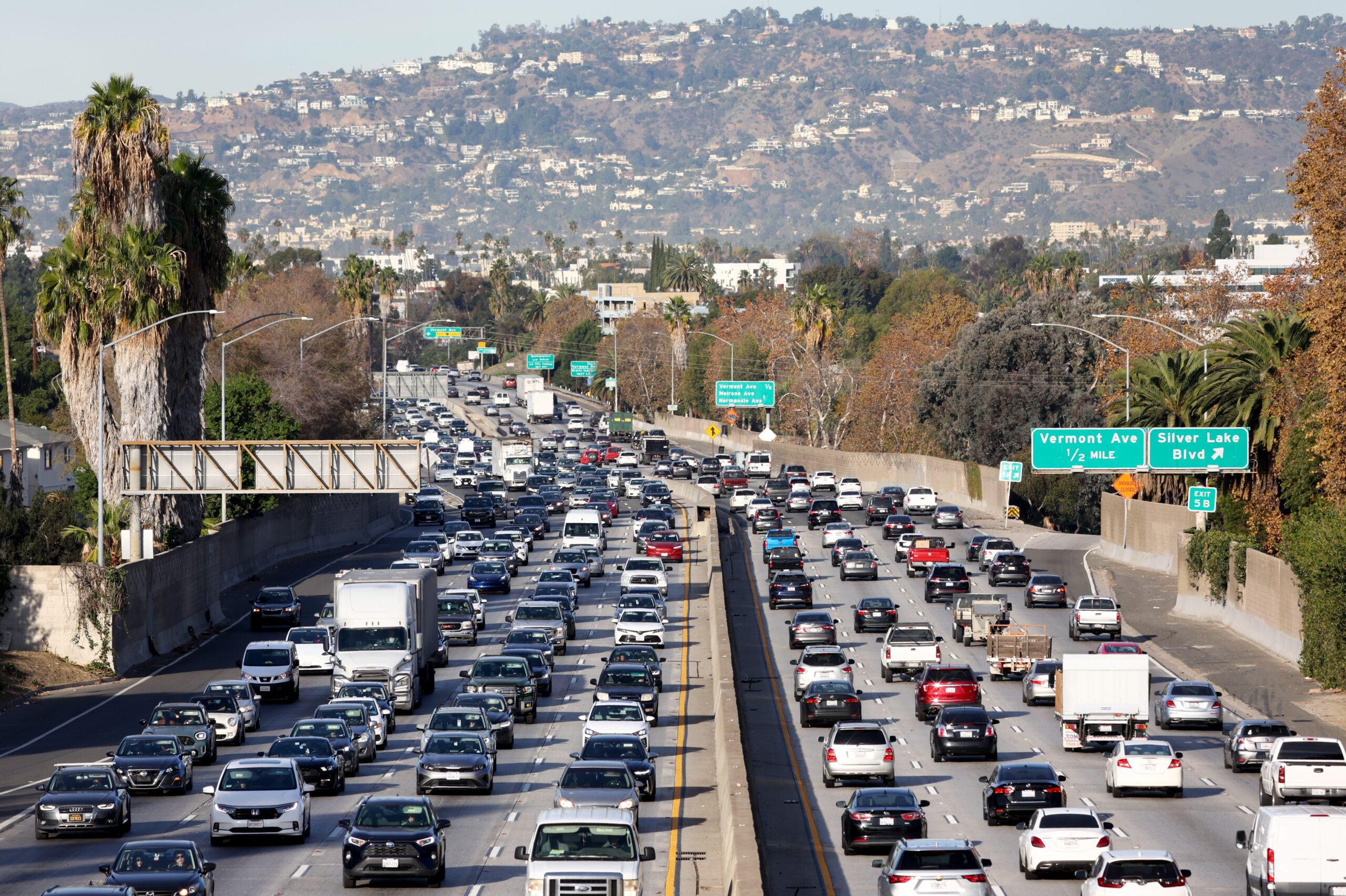
As summer draws to a close, many people are planning their final road trips of the season over the long Labor Day weekend. Despite rising prices, data shows that the enthusiasm for travel remains high, with short road trips becoming a popular choice.
According to the American Automobile Association (AAA), as of early September, the national average price for regular gasoline has reached $4.12 per gallon, significantly higher than last year’s $3.19, and hotel prices have also increased by about 9%. However, data from Chase Travel shows that domestic bookings are still on the rise, increasing by 17%.
AAA points out that due to the overall increase in airfare and hotel prices, many travelers are opting to drive to nearby national parks, local attractions, or embark on domestic road trips, thus driving the demand for short road trips.
To ensure a smooth journey for motorists during this busy holiday period and to avoid traffic nightmares, AAA has collaborated with traffic data analysis company INRIX. By utilizing GPS data, road sensors, and statistical models, they have predicted the best and worst travel times over the Labor Day weekend, as well as the most congested popular road segments across the United States.
Overall, the traffic patterns during this holiday period are quite clear: “Early rising is your best ally.” By taking advantage of the golden hours before noon or early afternoon, both for departure and return, motorists can significantly reduce the chances of getting stuck in traffic jams.
Best time to travel: Before noon
Worst time to travel: Noon to 8:00 PM
Best time to travel: Before 10:00 AM
Worst time to travel: 1:00 PM to 5:00 PM
It is expected that traffic disruptions will be minimal, and overall driving conditions will be smooth throughout the day.
Best time to travel: Before noon
Worst time to travel: 2:00 PM to 5:00 PM
Data indicates that cities like Seattle, Denver, and Boston are popular destinations this year, with surrounding highways expecting more severe delays than usual. Some road sections may experience travel times doubling or more during peak congestion:
Seattle:
Traveling from Seattle to Ellensburg via I-90E, peak congestion is expected on September 7th (next Monday) at 7:15 PM, with a travel time of 3 hours and 14 minutes, an increase of 121% from normal.
Boston:
Traveling from Boston to Providence, Rhode Island via I-95S, peak congestion is expected on September 4th (Friday) at 3:30 PM, with a travel time of approximately 1 hour and 32 minutes, leading to delays of 105%.
Washington, D.C.:
Traveling south on Park Avenue from Baltimore to Washington, peak congestion is expected on September 3rd (Thursday) at 4:45 PM, with an estimated travel time of 1 hour and 24 minutes, resulting in a 90% delay.
San Francisco:
Traveling from San Francisco to Sacramento via I-80E, peak congestion is expected on September 4th at 5:45 PM, with a travel time of 4 hours and 40 minutes, leading to an 81% delay.
Denver:
Traveling from Denver to Fort Collins via I-25N, peak congestion is expected at noon on September 3rd, with an estimated travel time of 1 hour and 39 minutes, causing an 81% delay.
In addition to timing to avoid traffic jams, AAA also reminds drivers to carefully check their vehicle’s condition before departure and to have an emergency kit, jumper cables, flashlight, as well as an ample supply of water and snacks in the car, for any unforeseen situations.
Based on past rescue data, AAA receives over 400,000 road assistance calls during the Labor Day holiday period. Being well-prepared is essential to ensure a pleasant and safe holiday.
(Adapted from reports by USA TODAY and other sources)