
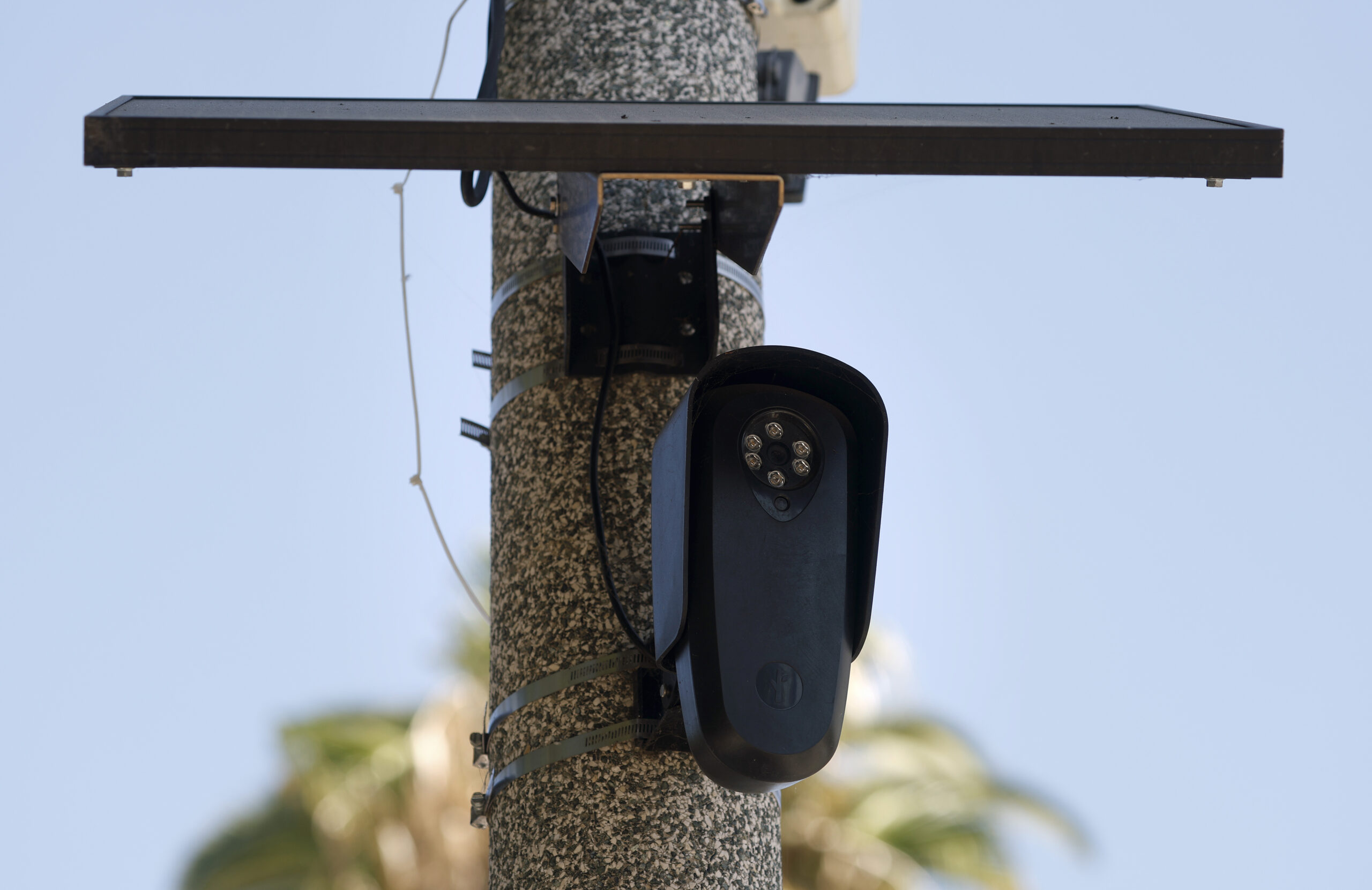
Dallas Police Department (DPD) announced on September 1 that a contract covering 321 Flock automatic license plate recognition cameras will be canceled due to the Texas state government halting funding. These cameras, supported by state funds, will cease operation by September 15.
Following the closure, over 300 Flock cameras funded by the Dallas city government will continue to operate.
Flock Safety, an American surveillance technology company, uses Artificial Intelligence (AI) in its Automatic License Plate Recognition System (ALPR) to identify license plate numbers, vehicle brands, models, colors, dents, and upload data to a national online database. Law enforcement agencies can use it to search for specific vehicles and assist in solving cases.
Sean Pease, Chairman of the Dallas Police Association, revealed in an interview with FOX 4 that the system has increased the efficiency of locating suspects by around 20% in 2026. While the police view it as a crucial investigative tool, critics express concerns about the potential formation of a large-scale vehicle surveillance network, privacy infringements, and possible misuse.
Flock recently released updated privacy and data retention policies in response to Texas halting related funding, expressing support for “thoughtful legislation” and strengthening privacy protection measures. They also hope to retain law enforcement’s ability to use their products to maintain public safety.
The direct motive behind this decision was Governor Greg Abbott’s order around August 28, instructing all state government agencies to halt funding for such cameras.
At the time of this decision, concerns over privacy and misuse of Flock have been escalating in Texas and across the United States. Abbott mentioned cases of police misuse, including an officer in Lufkin, Texas, allegedly using the system for surveillance on multiple individuals for over a year, and incidents involving officers in New Bedford, Massachusetts, tracking ex-girlfriends, among others.
In 2023, Texas passed a law adding $1 to car insurance policies annually, primarily to combat catalytic converter theft. Part of these funds, provided in grant form by the Texas Motor Vehicle Crime Prevention Authority, went to local law enforcement agencies for deploying Flock cameras. According to an investigation by the Texas Tribune, the MVCPA has assisted in deploying at least 3,200 cameras since 2023.
This move does not prohibit statewide use of Flock cameras or mandate removal of all equipment but rather severs state-level funding sources.
The three-year Flock contract approved by the Dallas city government in 2025 had a total value of approximately $5.738 million, with around $1.691 million coming from state grants. Following the state government’s funding halt, the related 321 cameras were forced to be canceled.
City Councilor Adam Bazaldua is pushing for a budget amendment to further reduce the city government’s annual funding of around $1.5 million for Flock and related surveillance systems.
Flock cameras have ignited controversy across the United States. Chairman of the Senate Judiciary Committee’s Crime and Terrorism Subcommittee, Josh Hawley (Republican from Missouri), has launched an investigation into the company, claiming it has established an “unprecedented nationwide surveillance network.” The American Civil Liberties Union (ACLU) has also pointed out risks of system misuse.
Currently, Florida has announced ceasing the use of Flock cameras on state highways; cities in Arizona like Tempe and Cave Creek have canceled contracts; and multiple towns in Massachusetts have terminated or suspended usage. Texas has become one of the states gradually phasing out such systems.