
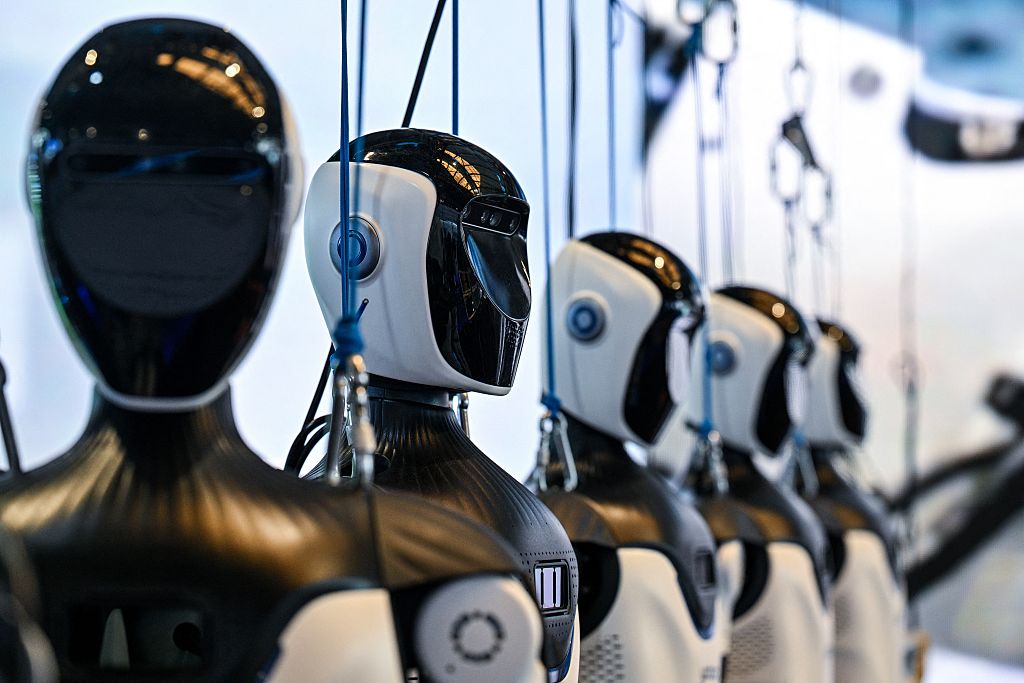
On Tuesday, September 1st, the Subcommittee on Communications and Technology under the House Energy and Commerce Committee in the United States passed a bipartisan bill that calls for a national security review of humanoid robots and quadruped robots from “foreign adversaries,” including those manufactured in China. The legislation also prohibits products deemed to pose a national security threat from entering the United States.
The bill, known as the “Guarding the U.S. against Adversarial Robotics Dominance Act of 2026” (GUARD Act), was jointly introduced by John Moolenaar, Chairman of the Federal House “Committee on Chinese Issues,” Republican Representative Jay Obernolte, and Democratic Representative Jennifer McClellan, and has garnered bipartisan support.
The legislation requires relevant national security agencies to assess within one year of the bill’s enactment whether humanoid and quadruped robots produced by “foreign adversaries” pose unacceptable risks to national security, including vulnerabilities such as “backdoors” that could be exploited for espionage or remote interference.
If a product is deemed to carry such risks or if the review is not completed within a year, it will be placed on the “Covered List” of the Federal Communications Commission (FCC), thereby prohibiting its importation into the United States.
Moolenaar emphasized the need for the United States to develop its domestic robotics industry to maintain technological competitiveness. He also accused China of expanding its robotics industry advantage through related industrial policies, suggesting that some Chinese-made robots may present security risks.
Michael Robbins, President and CEO of the Association for Unmanned Vehicle Systems International (AUVSI), stated that as robots become increasingly integrated into the economy and manufacturing sector, it is necessary to guard against sensitive data leaks, ongoing network access, or remote interference posed by high-risk systems.
Peggy Johnson, CEO of Agility Robotics, a U.S.-based humanoid robot company, expressed support for the bill, believing that it will help address relevant national security and economic risks while promoting the development of domestic manufacturing and trusted supply chains.
Representatives from the Foundation for Defense of Democracies and the Hudson Institute, among other organizations, also expressed support for the bill. They believe that as robots’ autonomous capabilities and data collection abilities advance, products closely linked to foreign governments could pose data security and network security risks.
Currently, the bill has been approved by the subcommittee and will undergo further review by the full House and Senate before completing the legislative process and officially taking effect.