
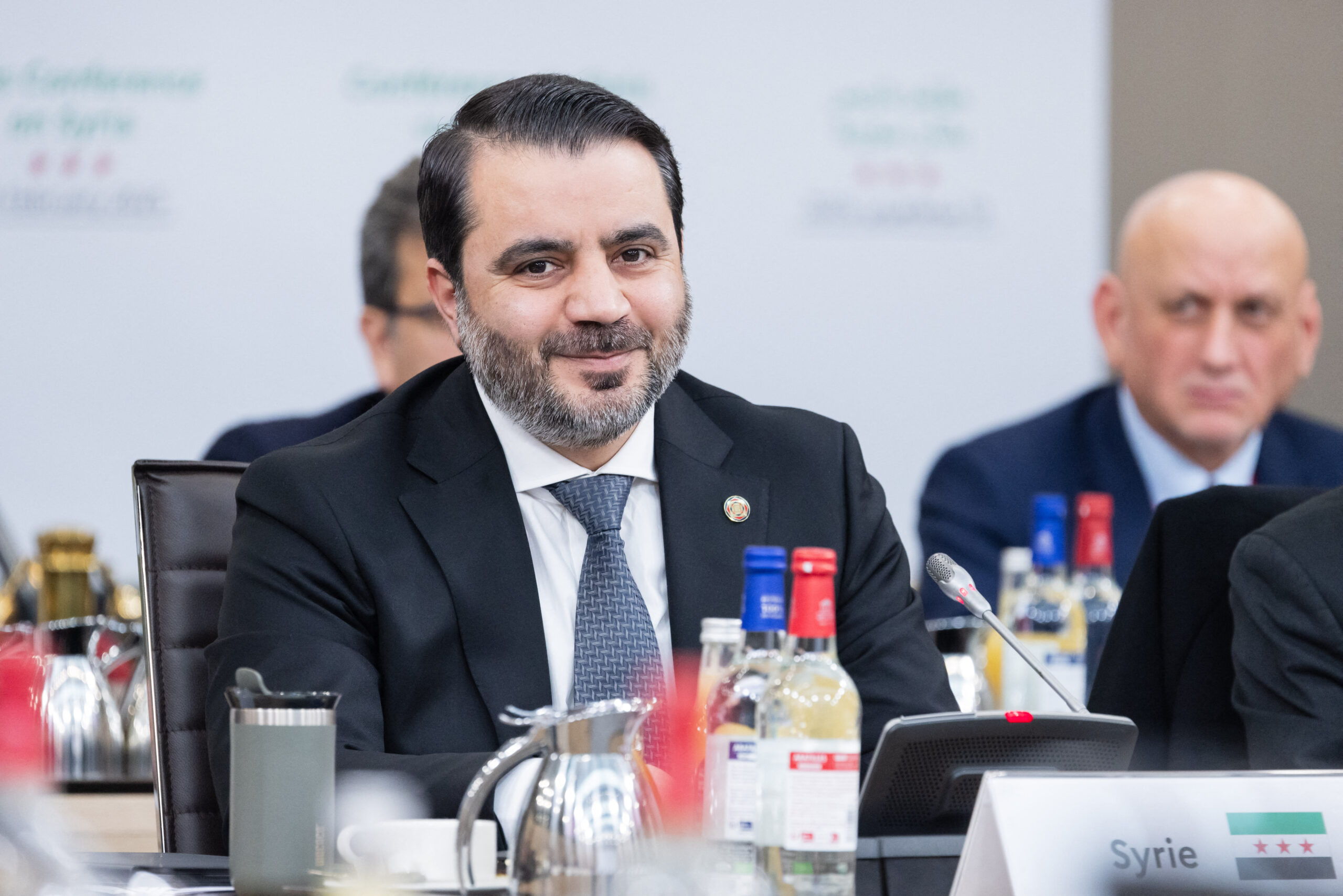
Libyan Prime Minister Abdul Hamid Dbeibah and Syrian Foreign Minister Asaad Hassan al-Shaibani met in Tripoli on Sunday (August 30) and agreed to reopen the Syrian Embassy in Tripoli, which had been closed for 14 years, and to restart the committee responsible for coordinating bilateral relations.
Dbeibah described this meeting as the beginning of a “new chapter” in the relationship between the two countries, emphasizing that bilateral relations should be based on “common interests, practical cooperation, and resolving outstanding issues.”
The reopened coordination committee is a prime ministerial-level entity primarily responsible for coordinating the relationship between the two countries in the political, economic, and social fields. According to the Syrian Arab News Agency (SANA), this move is one of a series of measures taken by the Syrian government to revive overseas diplomatic institutions and take care of the interests of its citizens abroad. Currently, there are around 200,000 Syrians residing in Libya, mainly in Tripoli and Benghazi.
Since the fall of the Assad regime in December 2024, the new Syrian government (post-Assad era) has been striving to reintegrate into the international community and restore diplomatic relations.
According to a statement from the National Unity Government led by Dbeibah, the talks covered security cooperation, counterterrorism, consular services, as well as the situation of prisoners, detainees, and refugees from both countries. Both sides agreed to open a Syrian consulate in Benghazi to elevate the diplomatic representation.
On the economic front, the two parties addressed unresolved financial obligations between Libyan and Syrian institutions. Shaibani also met with the Libyan Minister of Oil and Gas and officials from investment institutions to discuss cooperation in energy and investment sectors.
Shaibani stated that the reopening of the embassy reflects the importance of bilateral relations and paves the way for the legitimization of Syrians’ status in Libya. Taher Al-Baour, responsible for managing Libya’s foreign affairs and international cooperation, pointed out that this is a “positive step” towards bringing the two countries’ relations back on track and further developing them.
The reopening of the embassy and enhanced cooperation has been in preparation for some time. In August 2025, a Syrian delegation raised the flag of the post-Assad era at the Tripoli embassy in anticipation of its reopening.
The embassy was closed in 2012 after the Libyan National Transitional Council recognized the Syrian opposition. Subsequently, relations between the two countries were severed during the rule of former President Bashar al-Assad.
In December 2024, the Syrian opposition armed forces overthrew the Assad regime, ending the 61-year rule of the Ba’ath Party and the 53-year rule of the Assad family.
Since 2014, Libya has been in a state of division between east and west: on one side is the National Unity Government led by Dbeibah, based in Tripoli, and on the other is the eastern government led by Osama Hammad with support from rebel commander Khalifa Haftar.
Syria’s choice to restore diplomatic ties with the internationally recognized government in Tripoli carries political significance. It also reflects a reshaping of the diplomatic landscape in the Middle East and North Africa region post-Assad’s ousting.