
Nepalese authorities have collectively buried hundreds of unidentified victims of mudslides, caused by a torrential flash flood that hit the Himalayan region a few days ago, washing away their bodies.
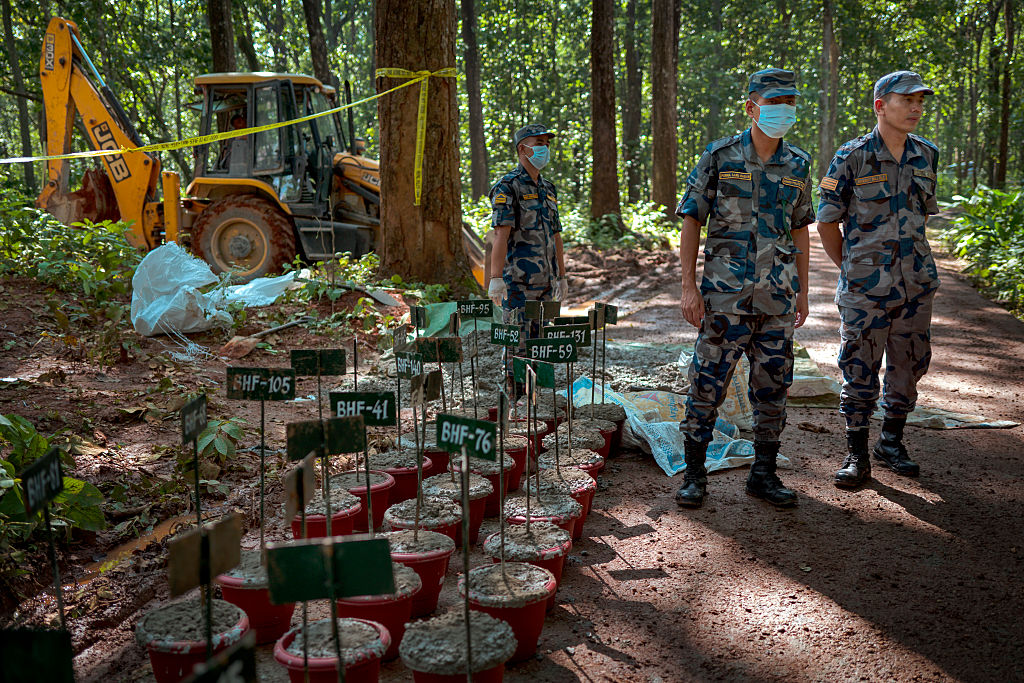
Chitwan, Nepal, known for its forests and rivers, was until recently a popular spot for morning walks along forest trails. However, now this area has turned into a mass burial ground for unidentified victims. Authorities have excavated hundreds of graves in the Devghat Forest of Chitwan district to temporarily bury bodies that have severely decomposed and cannot be identified.
Ganesh Arya, the chief administrative officer of Baratpur region in Chitwan district, stated, “We had no choice but to take this measure. We are concerned that the rapidly decomposing bodies pose a risk to public health.”
Last Saturday, Nepalese authorities buried 96 unidentified bodies in this forest area and plan to bury over a hundred more on Sunday. Meanwhile, rescue teams continue to search for the bodies of the deceased in rivers and piles of debris.
Last Wednesday, a glacial collapse in the Himalayas triggered flash floods that swept through multiple valleys along the Nepal-China border, resulting in at least 800 deaths in Nepal and the Tibetan region of China, with over 3,000 people missing and causing catastrophic damage to local infrastructure.
In Nepal, around 100 rescue workers, police, and other officials are assisting in recording information about the deceased, taking photos of the bodies, aiding in identifying them, and preparing for burials.
Nepalese authorities have carefully documented the location of each burial site for the deceased, placing identification markers on the surface and underground, and recording precise location data.
DNA samples have been collected from the unidentified victims to facilitate identification in the future through methods such as claiming by relatives, official records, or genetic testing.
India has sent a forensic team to collaborate with Nepal in analyzing DNA samples. Nepal is also in communication with a team from China (PRC).
Chitwan district has seen the highest number of bodies discovered in this disaster, salvaging approximately 250 corpses carried away by the mudslides. Officials in the area mentioned that the district’s forensic infrastructure is limited, morgue capacity is insufficient, and the hot and humid weather accelerates body decomposition, all of which further exacerbate the pressure on authorities in handling the large number of deceased bodies found.
(Reuters contributed to this report)