
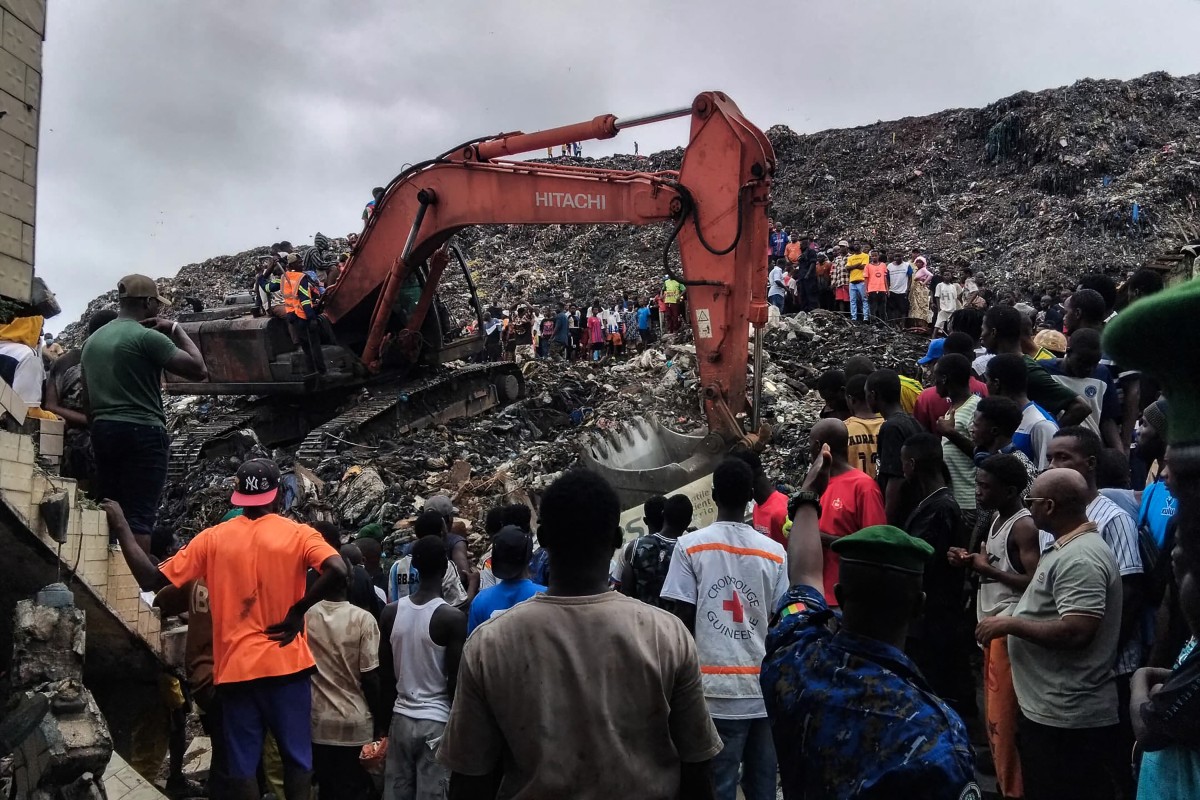
The government of Guinea in West Africa announced that a landfill collapse occurred early Sunday (August 23) at a large garbage dump in the capital city of Conakry, engulfing nearby tents and makeshift huts, resulting in at least 30 deaths and 22 injuries, with 6 of them in serious condition.
The incident took place in the Dar Es Salam area of Conakry.
According to a statement released by the government, the collapse occurred around 2 am on Sunday after heavy rain during the night. Personnel, including the military, have been dispatched to search for survivors.
A woman told local media that her five children perished in the disaster. Concerns are raised that the death toll might rise.
Rescue workers are using excavators to search through the mountainous pile of garbage, while local residents have gathered at the scene.
Guinea’s Prime Minister Mamadou Oury Bah visited the site to assess the situation and oversee the rescue operation.
The landfill is the largest open-air garbage dump in Conakry. Guinea’s Minister of Territorial Management Djenab Toure announced last Thursday (August 20) that the government would close the landfill due to safety hazards, especially during the current rainy season. He also mentioned that the garbage would be relocated to areas outside the city of Conakry.
Authorities stated that residents living near the landfill had received relocation notices before the accident occurred, and many had moved away. However, despite the warnings, many people remained near the site when the disaster struck.
Toure stated at the scene of the accident on Sunday: “We will ensure that the remaining families are relocated to other places.”
Guinea possesses the world’s largest bauxite reserves. The Simandou deposit in the country holds the world’s richest untapped iron ore resources, with a large mining project initiated last November. However, the infrastructure in this West African country is underdeveloped, and poverty is widespread. According to a report by the World Bank released in April, out of Guinea’s population of 15.1 million, 3.7 million people live on less than $4.20 per day.
(This article references reports from Reuters and the BBC)