
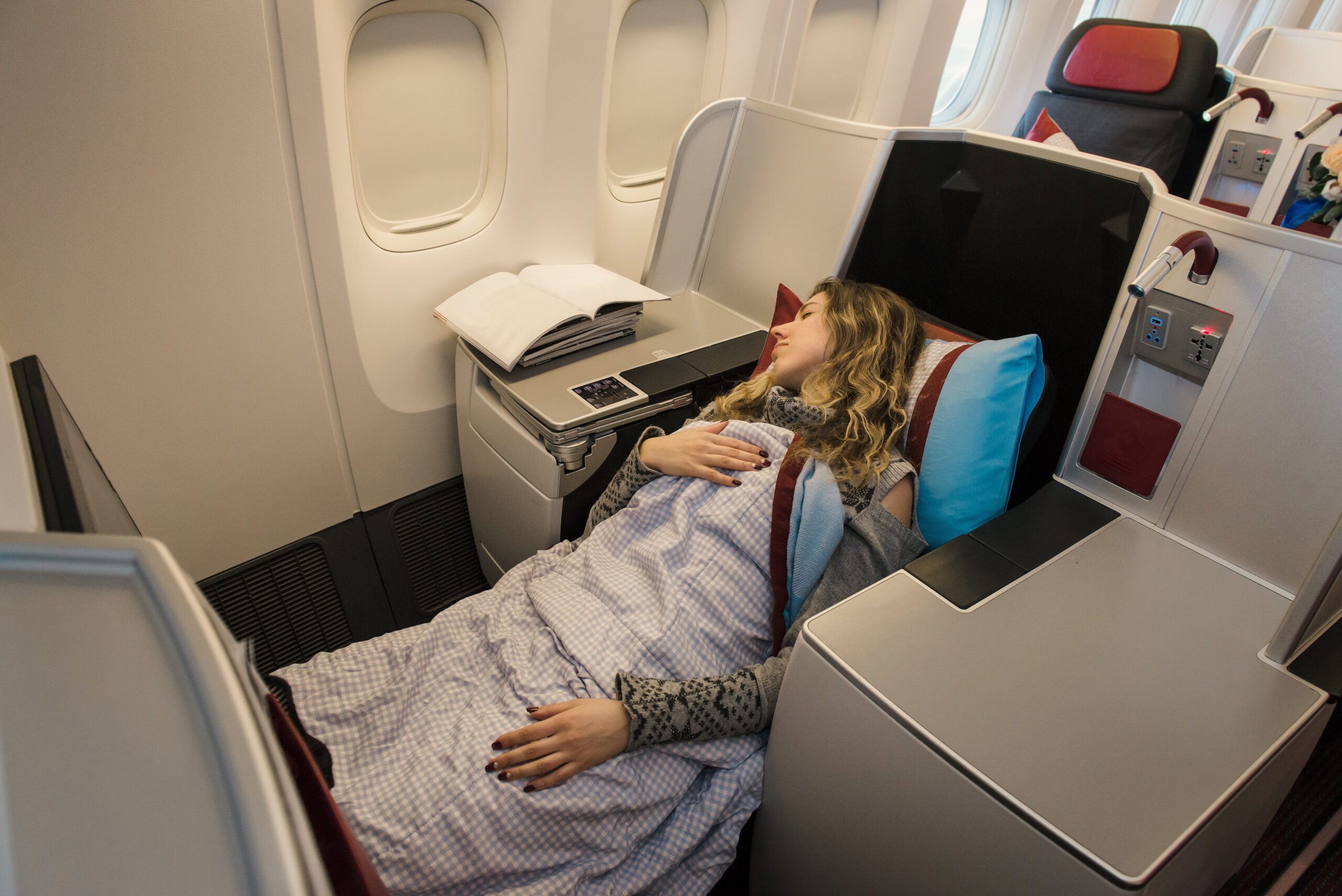
Most people fly in the economy class when taking a plane, but sometimes there may be an opportunity to upgrade to the business class. For passengers experiencing the business class for the first time, this kind of experience can be quite fresh and may take some time to adjust to. For flight attendants, witnessing the reactions of passengers taking a high-class cabin for the first time is often a great joy in their work.
According to the aviation news website “Simple Flying,” flight attendants can be considered behavioral analysts at ten thousand meters above ground. From the moment passengers step into the cabin, they begin observing and evaluating. Based on safety considerations, they pay attention to passengers’ health conditions and behaviors, identifying who may need assistance and who may potentially cause trouble.
Flight attendants can usually tell right away which passengers are flying business class for the first time and will observe various behaviors, including their requests and conduct. The business class not only offers champagne and seats that can lie flat, but also has some unwritten rules, focusing on comfort, tranquility, and privacy.
From several aspects, flight attendants can tell if you are flying business class for the first time:
One common mistake first-time business class passengers make is dressing too formally (such as well-tailored suits or stiff leather shoes), as if they were going to a board meeting rather than enjoying a flight journey that requires relaxation. This often signals to flight attendants that they have not yet experienced the discomfort of sleeping on a plane.
On the contrary, experienced business class frequent flyers often choose breathable and comfortable layered clothing, shoes that are easy to put on and take off, and outfits that won’t become wrinkled even after a few hours of sleep.
Business class seats are equipped with various tilt adjustment angles, built-in massage functions, and complex privacy doors – these designs aim to enhance the travel experience, but the numerous buttons and switches can often make first-time passengers feel overwhelmed, requiring time to explore and learn.
First-time business class passengers often need assistance from others to find key devices like tray tables. Tray tables are usually stowed under the seat or within the side console, rather than positioned on the back of the front-row seats like in the economy class.
Business class amenity kits typically contain select skincare products and comfortable socks. Flight attendants encourage passengers, especially first-time ones, to fully use these items rather than taking them unused as souvenirs.
Apart from the amenity kit, first-timers may also inquire about taking items like blankets, pillows, or headphones with them, but these items should remain on the plane according to regulations.
Passengers flying business class for the first time often enjoy documenting their experiences, such as taking photos of the lie-flat seats, items in the amenity kit, in-flight meals, and of course, champagne. This reaction is understandable, as it is an exciting experience compared to economy class.
One of the favorite scenes for flight attendants to observe with first-time business class passengers is the joy and excitement on their faces as they turn left into the cabin after boarding.
First-time business class passengers often have a noticeable characteristic of being overly polite. They may unintentionally show a sense of apology when interacting with flight attendants, even apologizing for requesting a glass of water, as if they feel the need to prove they deserve to be there.
This indicates that these passengers view this environment as a rare luxurious indulgence rather than a routine travel experience. Flight attendants can easily recognize this attitude.
When flight attendants present the menu, the difference in mentality between first-time or occasional business class passengers and experienced regulars becomes apparent. The former often have a fear of missing out and feel the need to try every snack, drink, and meal offered, resulting in a table full of food even if they are not very hungry at the time.
In contrast, the latter usually eat more simply, or even skip the meal entirely to prioritize sleep, as they know that arriving at the destination well-rested is more valuable than indulging in a steak en route.
A significant feature of first-time business class passengers is their intense focus on flight attendants, keenly observing the entire service process with interest. They pay attention to how the meals are presented, drinks are poured, and how flight attendants interact with each passenger.
In comparison, experienced regulars often bury themselves in using their laptops or rest with their eyes closed even before the landing gear is retracted.
If you are flying business class for the first time, you may feel excited and eager to experience all the services, but you should still be mindful of the atmosphere in the cabin, the behaviors of other passengers, and the service style of the flight attendants, adjusting your behavior accordingly.
Courtesy is crucial, especially in terms of consideration for others. This includes maintaining personal space tidy and not encroaching on the space of other passengers. Additionally, you should adhere to etiquette norms, with a smart casual dress code being appropriate.
Experts have previously suggested that if you want to upgrade from economy class to business class, your attire should not be too casual. While wearing the best clothes does not guarantee an upgrade, dressing appropriately certainly increases your chances of being selected.