
Taiwan’s espionage cases continue to surface, with the Legislative Yuan’s Judicial and Legal Affairs Committee reviewing the proposed amendment to certain articles of the Military Penal Code for the Army, Navy, and Air Force, adding a provision for “expressing loyalty to the enemy,” punishable by a maximum of 7 years in prison. Kuomintang lawmaker Weng Hsiao-ling believes that the proposed sentencing is too severe and should be revised downward. Premier Cho Jung-tai stated, “If ensuring that I am the only one who can prevent the reduced sentences for military personnel who defect to the Communist Party in the future, I will still persist.”
The infiltration of Taiwan by the Chinese Communist Party is severe, targeting active military personnel who have been seen using video recordings, the internet, and other technological means to swear loyalty to hostile forces or sign “non-resistance commitments/surrender oaths,” posing a serious threat to national security. Due to the lack of clarity in existing legislation, there have been legal loopholes that render such actions unpunishable.
The Executive Yuan of the Republic of China passed an amendment proposal to Article 24 of the Military Penal Code for the Army, Navy, and Air Force on December 18, 2025, aiming to crack down on defection, dereliction of duty leading to defection, and introducing penalties for conspiracy and preparation, with a maximum sentence of 7 years in prison, the proposal was forwarded to the Legislative Yuan for deliberation. The amendment added penalties for “expressing loyalty to the enemy,” specifying that active military personnel who demonstrate loyalty to the enemy through words, actions, writing, illustrations, electronic records, technological means, or other methods may face imprisonment ranging from 1 to 7 years.
Kuomintang lawmaker Weng Hsiao-ling argued that military personnel expressing disloyalty to the country should be penalized, but she believes that the proposed sentencing by the Executive Yuan is too harsh, failing to adhere to the principles of proportionality and equivalence of crime and punishment. Because sentences of 1 to 7 years in prison do not allow for parole, she suggested revising it down to below 5 years in order to balance national defense security needs with freedom of speech.
The Judicial and Legal Affairs Committee of the Legislative Yuan reviewed the proposed amendment to certain articles of the Military Penal Code for the Army, Navy, and Air Force, adding provisions for “expressing loyalty to the enemy” punishable by a maximum of 7 years in prison. As lawmakers from both sides failed to reach a consensus on sentencing, the committee chairman and Democratic Progressive Party convener, Chuang Jui-hsiung, announced that the amendment to Article 24 of the Military Penal Code would be retained for further discussion among party caucuses.
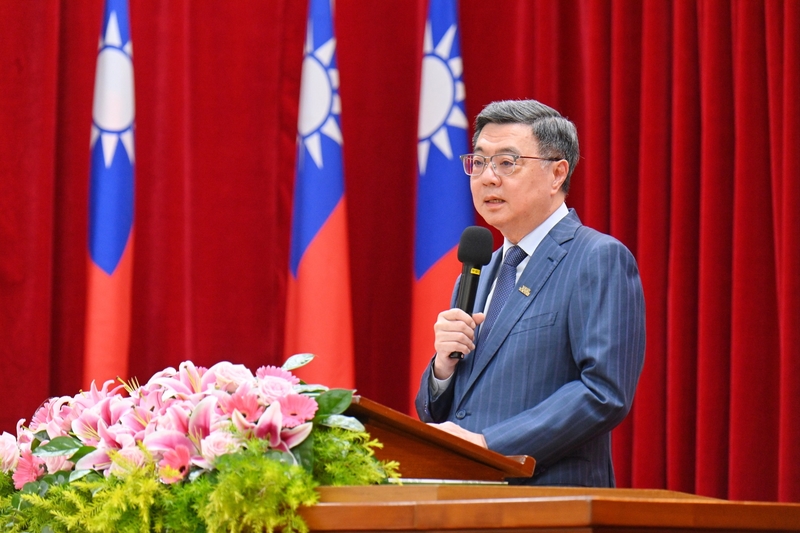
The Legislative Yuan is currently engaged in an intense battle over the approval of the national budget for the year. Premier Cho Jung-tai, attending an event before the Legislative Yuan’s Budget Day, responded to Weng Hsiao-ling’s proposal to freeze his salary from September to December this year, stating that personal matters are trivial compared to national interests. “If ensuring that I am the only one who can prevent the reduced sentences for military personnel who defect to the Communist Party in the future, I will still persist.”
Today’s Legislative Yuan session witnessed the showdown over the final budget vote for this fiscal year, primarily due to the prolonged delay of 351 days in the review and approval of the central government’s annual budget, marking the longest such delay in constitutional history. As the deadline for the submission of next year’s budget approaches at the end of August, Cho Jung-tai expressed his hope for more efforts with Legislative Yuan President Han Kuo-yu, emphasizing that budget scrutiny is a matter of great national importance and should not lead to a situation where this year’s budget remains incomplete when next year’s budget arrives, or it would set a precedent in constitutional governance.
Cho Jung-tai stated today that despite the delayed final stages of this year’s budget vote, it is good news for the entire nation. He expressed hope that the country will move in the right direction and urged the Legislative Yuan to thoroughly review its processes for the coming year to prevent such long delays in administrative operations.