
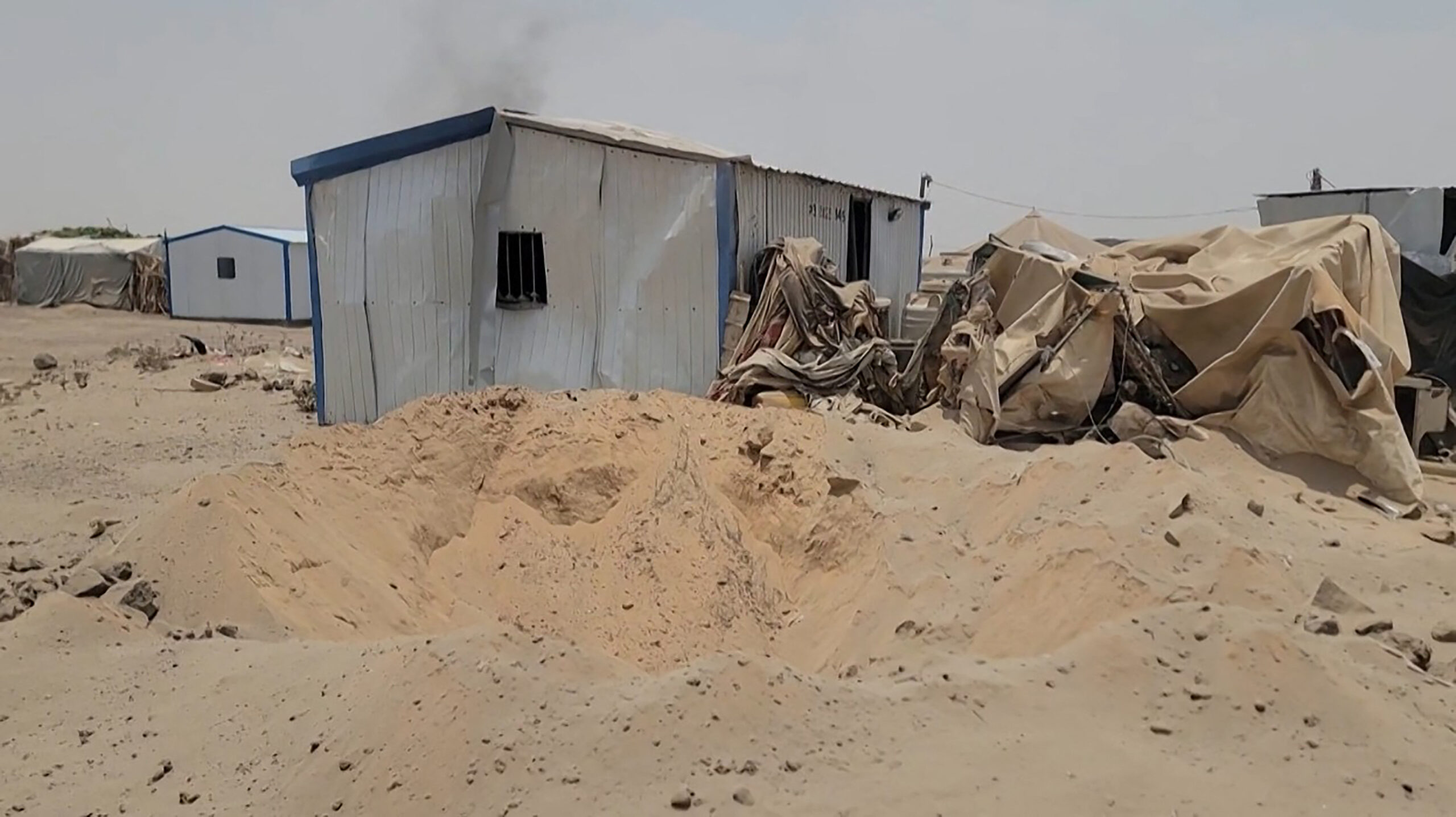
Yemen’s Houthi rebels have launched consecutive missile and drone attacks over the past two days, resulting in casualties among civilians and government forces. The United Nations warned on Friday (August 7) that as the conflict in Yemen escalates in sync with attacks on Red Sea shipping, the risk of the country plunging into a large-scale conflict has risen to its highest level since the ceasefire in 2022.
At the same time, the threat posed by the Houthis to Red Sea shipping has raised the risk in the Bab el-Mandeb Strait. Against the backdrop of continuing regional tensions, Saudi Arabia, Turkey, and Pakistan signed a joint defense agreement on Friday.
On the other side, there have been diplomatic developments in the Hormuz Strait, with U.S. officials indicating that Iran and Oman may soon reach an agreement to resume commercial shipping.
The Houthis continued their attacks on Marib province on Friday. The Yemeni Minister of Health stated that residential areas and camps for displaced people were shelled, resulting in the death of two civilians and injuries to 14 others. Military sources also informed AFP that the attacks in Marib province led to the deaths of 8 government troops and injuries to 12 others.
The Houthis claimed their target was the Sahn al-Jinn military camp where Saudi-backed forces, warehouses, vehicles, and military equipment were housed. Reuters noted that there was no way to independently verify either side’s claims.
A day earlier, the Houthis also launched major attacks on military camps in Marib and Hadramout provinces. According to AFP citing a military source, at least 58 government soldiers were killed and dozens more were injured, marking one of the deadliest clashes between the two sides in recent years.
The Houthis claimed that their actions were in response to the discovery of Saudi-backed forces amassing in large numbers, preparing to escalate military actions in their controlled areas.
On Thursday, the southern Saudi region of Najran was also attacked by the Houthis. Saudi military reported 11 civilians injured, including a 4-year-old child.
Hans Grundberg, the UN Special Envoy for Yemen, remarked that the recent attacks in Marib and Hadramout, combined with renewed assaults on commercial ships in the Red Sea and the Gulf of Aden, have elevated the risk of a large-scale conflict in Yemen to its highest point since the UN-mediated ceasefire in April 2022.
He urged all parties to exercise utmost restraint and return to negotiations led by the United Nations.
The recent military escalation by the Houthis has extended to the maritime domain. The organization announced last month a blockade of Red Sea shipping related to Saudi Arabia, citing it as a response to Saudi’s blockade of Yemen; Riyadh denied the “siege” allegations made by the Houthis.
The Bab el-Mandeb Strait links the Red Sea and the Gulf of Aden, serving as a vital passage for Asian and European trade via the Suez Canal. During peacetime, approximately 12% of global trade, including a quarter of global container shipping, passes through the Bab el-Mandeb Strait.
According to shipping analysis company Kpler, the number of oil tankers passing through the strait has decreased this week following the Houthi attacks.
Ahmed Nagi, senior analyst at the International Crisis Group focusing on Yemen, stated: “From Iran’s perspective, having additional pressure points throughout the region allows it to have more leverage. The Houthi militants enable Tehran to exert influence over one of the world’s most critical maritime chokepoints.”
Amid escalating regional security concerns, Saudi Arabia, Turkey, and Pakistan signed the “Mecca Joint Defence Agreement” in Mecca on Friday. The trilateral statement declared that an armed attack on any one country would be treated as an assault on all three nations.
However, the agreement did not specify the exact military obligations of each country. Turkey emphasized that the agreement was purely defensive and not aimed at any specific country.
As tensions rise in the Bab el-Mandeb Strait, there is a glimmer of hope in the Hormuz Strait.
A U.S. official told Reuters on Friday: “Oman and Iran have made progress on the strait issue, and we expect an agreement soon. Once an agreement is announced and unhindered commercial shipping is restored, the U.S. will lift the blockade on Iranian ports.”
Before the U.S.-Iran conflict erupted, about a fifth of global oil consumption was transported through the Hormuz Strait. As negotiations in Hormuz seem to be making headway, the security risks in Yemen and the Bab el-Mandeb Strait are simultaneously escalating, drawing significant attention to the situations in these two critical maritime energy and trade channels.