
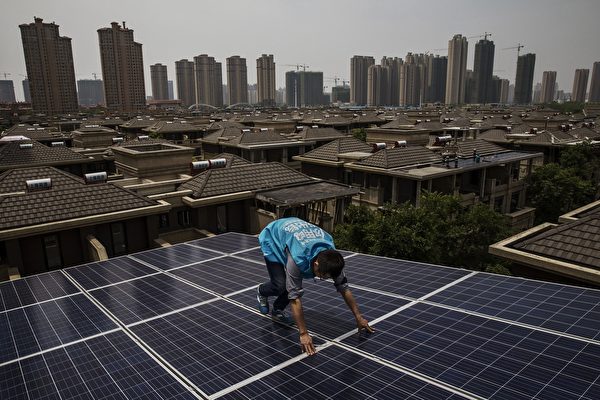
The Chinese solar industry continues to face challenges, with 7 major enterprises expected to incur losses in 2025, totaling up to 39.2 billion yuan (RMB).
According to a report from Nikkei Chinese website, the Chinese solar industry has been unable to shake off the market downturn caused by overcapacity since it first experienced losses in 2024.
Statistics show that in the fiscal year of 2024, 5 out of the 7 enterprises experienced losses. In the fiscal year of 2025, including the largest enterprise JinkoSolar, all enterprises are expected to incur losses, with Trina Solar and Tongwei seeing an expansion in losses compared to the previous fiscal year. The combined losses of the 7 enterprises are estimated to be at least 36.4 billion yuan, and a maximum of 39.2 billion yuan. Compared to the losses in 2024 (totaling 27 billion yuan), the losses in 2025 have further increased.
Reports indicate that with two consecutive fiscal years of significant losses, the Chinese solar industry has not been able to break free from the situation of plummeting product prices due to overproduction.
It is anticipated that the trend towards decarbonization and the rise in energy prices will drive demand growth. Major solar panel enterprises in China have been actively expanding their production capacity since around 2022. However, the growth rate of supply has outpaced the rate of demand increase, leading to intense price competition to secure orders and resulting in a sharp decline in product prices.
According to statistics from BloombergNEF, as of the end of 2025, the price of solar panels per watt remained at around 9 cents, with little variation throughout the year.
Despite the measures taken by the Ministry of Industry and Information Technology of the Communist Party of China in July 2025 to cut production capacity, these measures did not have a significant effect in reversing the price trends.
Data from the industry association, the “China Photovoltaic Industry Association,” shows that the solar panel production of Chinese enterprises from January to October 2025 reached 514 gigawatts, a 13.5% increase compared to the same period in the previous year.