
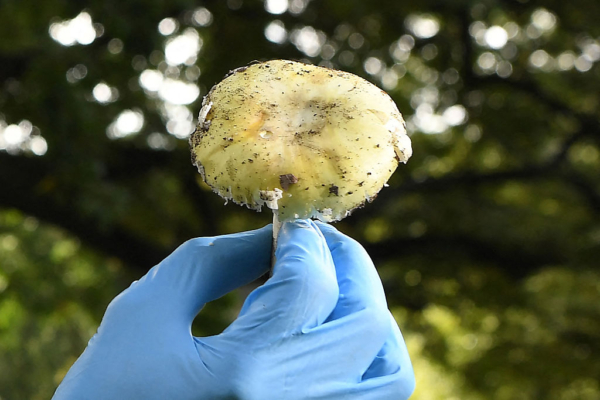
California is currently experiencing the emergence of a type of mushroom in the wild that closely resembles edible mushrooms but harbors deadly toxins. The California Department of Public Health (CDPH) has issued an urgent warning, advising the public not to pick any wild mushrooms.
These deadly mushrooms are scientifically known as “Amanita phalloides,” also called “Death Cap fungus,” a highly toxic fungus in the Amanita genus. The Health Department has stated that from mid-November to early December, the California Poison Control System has confirmed 21 suspected poisoning cases caused by the toxins of the Death Cap fungus.
As of December 5th, this wave of mushroom poisoning incidents has resulted in the death of one adult, with a total of 21 people poisoned. Several patients, including children, have suffered severe liver damage, and at least one patient may require a liver transplant due to significant damage. Patients are mainly concentrated in Monterey and the San Francisco Bay Area, but the entire state is at risk.
The California Health Department points out that “Death Cap fungus” can be found in various locations throughout California, especially around oak trees and other broad-leaved trees (including pine trees), as autumn and winter rains provide optimal conditions for its growth.
Of concern is that the appearance and taste of “Death Cap fungus” and “Destroying Angel” (a highly toxic white Amanita mushroom) and other poisonous mushrooms may closely resemble edible mushrooms, making them easily confused. Furthermore, relying solely on the mushroom’s color is not a reliable way to determine if it is poisonous.
If consumed accidentally, severe poisoning can occur immediately. Cooking, boiling, drying, or freezing cannot remove the toxins, nor can they make the mushrooms “safe.” Additionally, these toxic mushrooms can cause irreversible damage to the liver and kidneys.
The Health Department states that if wild mushrooms are consumed accidentally, toxic reactions may occur. Initial symptoms include diarrhea, nausea, vomiting, abdominal pain, and dehydration. These symptoms typically manifest within 6-24 hours after consumption and may temporarily subside within a day.
However, this temporary relief does not indicate recovery entirely. The Health Department warns that patients may experience complications later on, with many developing severe or even life-threatening liver damage or liver failure within 48-96 hours after ingestion.
Due to the lethal nature of poisonous mushrooms, California officials strongly advise the public not to pick any wild mushrooms during this high-risk season. If you wish to consume mushrooms, make sure to purchase them from reputable supermarkets and legal vendors.
The California Poison Control System hotline (1-800-222-1222) is also available to provide emergency guidance on mushroom poisoning.